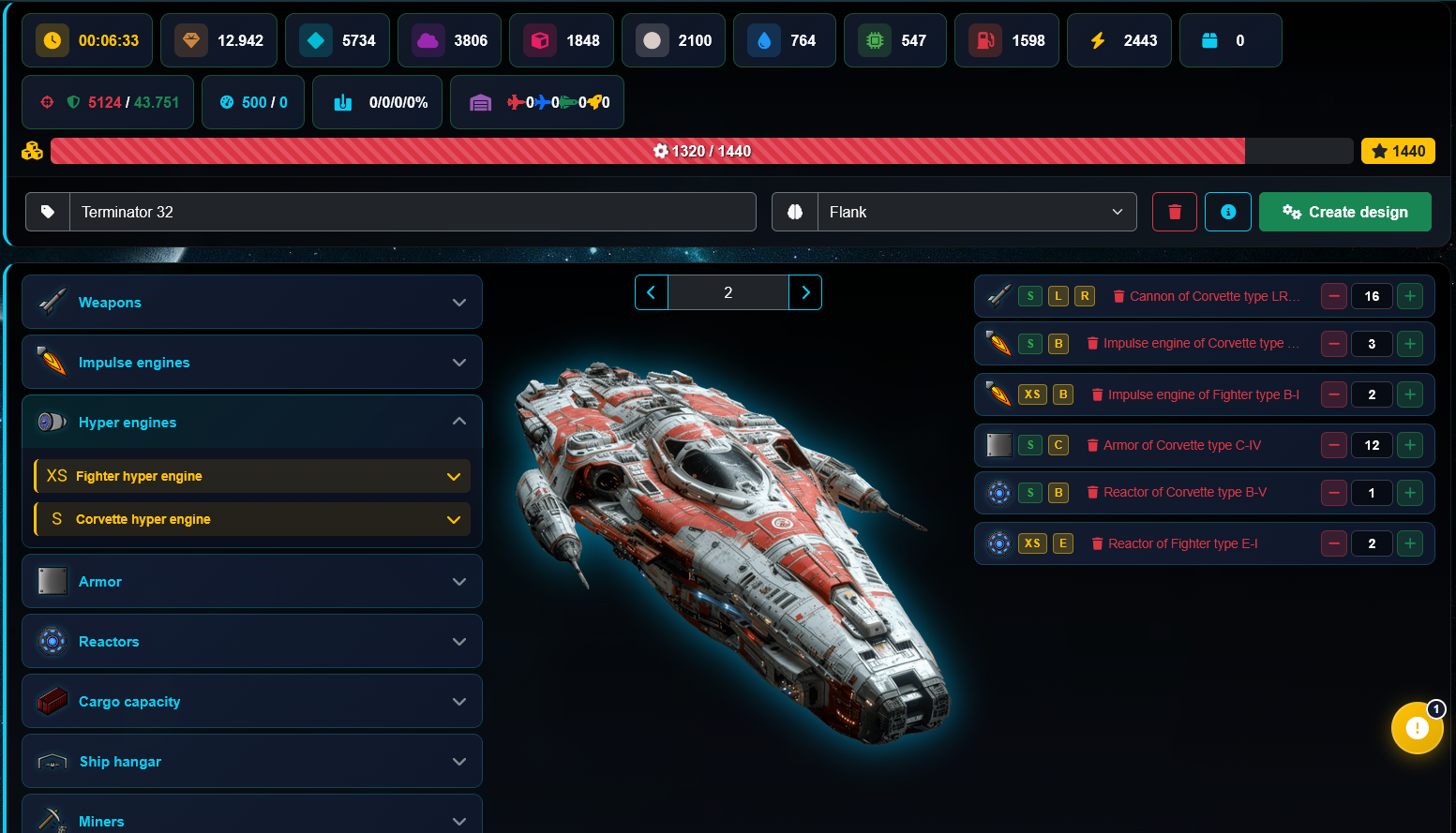
A defence does not come ready-made: you design it just like a ship, with its own chassis and its own parts. That is the Defence chassis, and it only accepts class F parts, which come from the Defence Technology research branch. The full route is three steps:
- Research Defence Technology. Every level opens one new class F part.
- Design in the designer, picking the Defence chassis and fitting whichever parts you want.
- Build the design from the shipyard, in the defences tab.
The first four parts are exactly the ones needed to assemble a complete defence, which is why below level 4 you cannot design anything that holds together:
| Level |
Part unlocked |
What it does |
| 1 |
Cannon |
Damages whoever attacks you. |
| 2 |
Armour |
Absorbs the punishment the defence takes. |
| 3 |
Reactor |
Provides the power that feeds every other part. |
| 4 |
Cargo |
Protects your resources: a raider can only carry off what your hold does not cover. |
The defence chassis costs no fleet capacity and inherits the budget of the largest ship size you have unlocked, so your defences grow more powerful as the round goes on without you having to do anything special.
If your core is destroyed: weakened defence
Your defence is never destroyed and leaves no debris, but it does not walk away from a defeat unharmed. If the attacker manages to destroy the object's core, the defence is damaged and needs to repair itself.
- Right after the battle its attack and structure drop to 50 %.
- From then on it recovers gradually over one hour, until it is back to 100 %.
- Its cargo capacity is not affected: it only loses punch and staying power.
Every new destroyed core restarts the penalty: the defence drops back to 50 % and the hour starts again. Chaining attacks keeps a defence permanently crippled, so after losing the core it is wise not to stay exposed. You can see the current value, the original one and the remaining time in the planet's Defence tab.
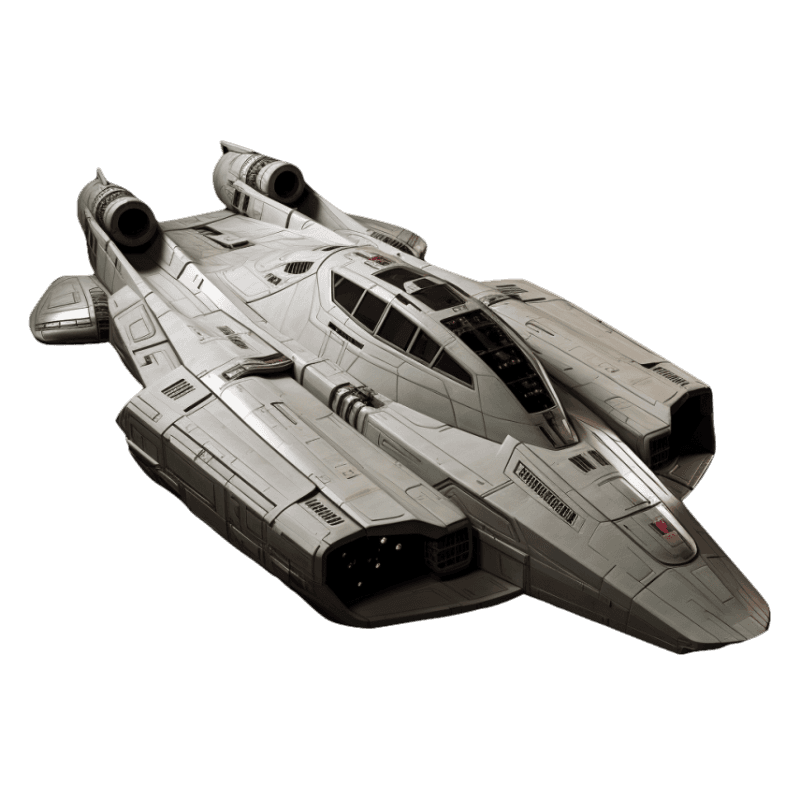 Fighter
Fast and cheap. Ideal in swarms and exploration.
Fighter
Fast and cheap. Ideal in swarms and exploration.
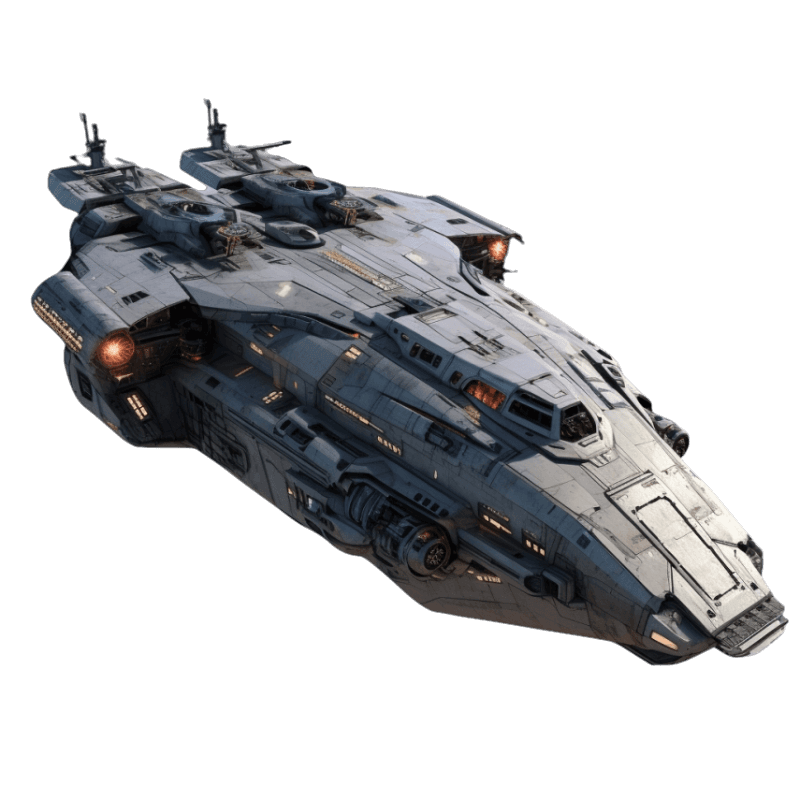 Corvette
Balanced. Good cost-to-power ratio.
Corvette
Balanced. Good cost-to-power ratio.
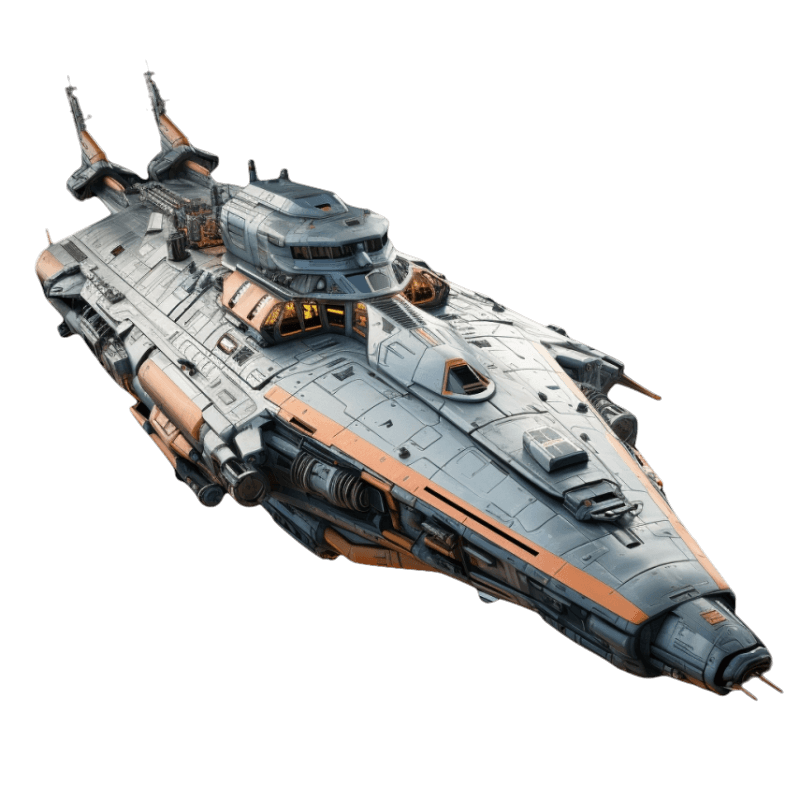 Cruiser
Medium ship with high sustained damage.
Cruiser
Medium ship with high sustained damage.
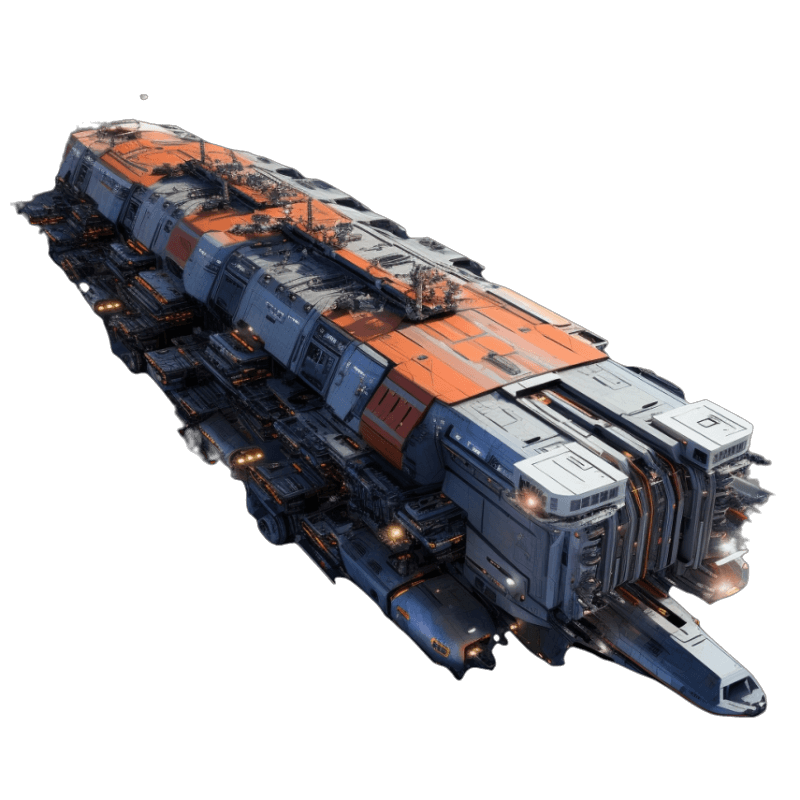 Battleship
Maximum armor and firepower.
Battleship
Maximum armor and firepower.
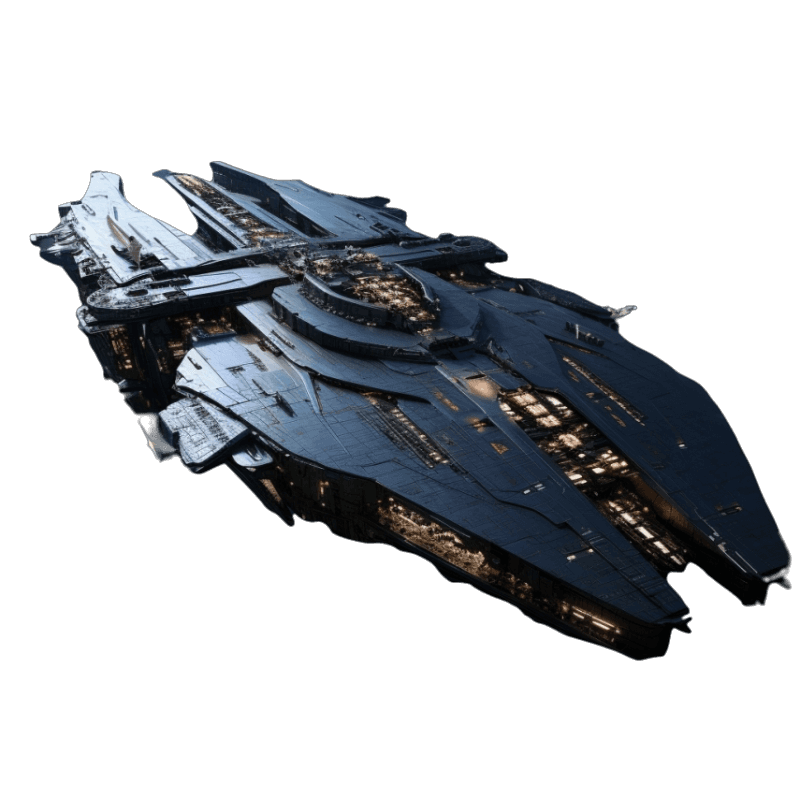 Titan
Elite ship. The most powerful unit in the game.
Titan
Elite ship. The most powerful unit in the game.
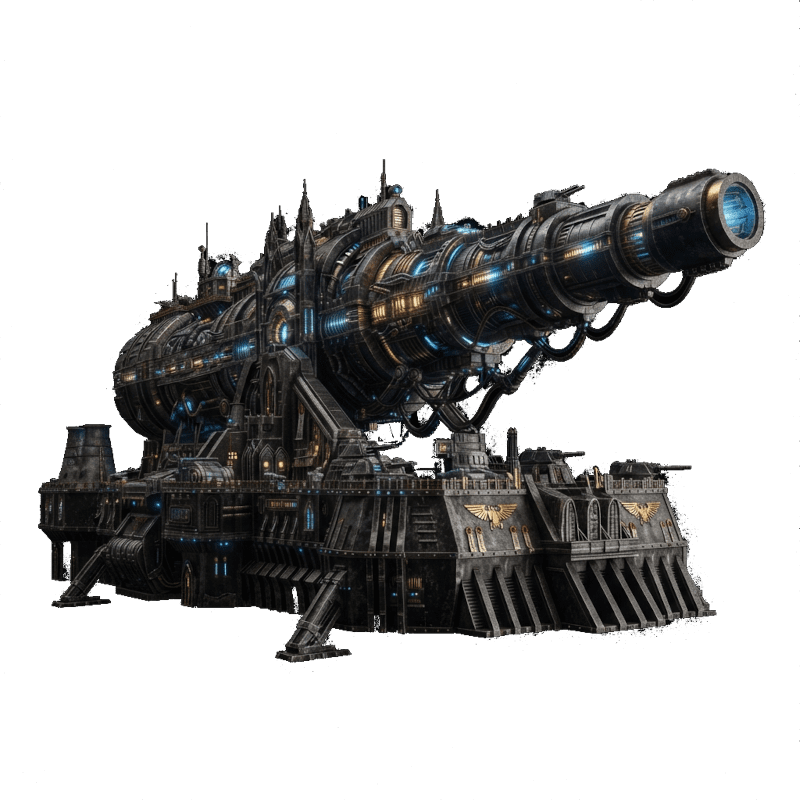 Defence
It does not fly. It stays protecting the planet where you build it.
Defence
It does not fly. It stays protecting the planet where you build it.